A little more privacy. A brighter everyday space.
Privacy Glass for Florida Homes: Keep the Light, Soften the View
If the blinds stay closed all day, your window may be giving you a view you do not need. Plan for daylight, privacy, and the way you actually use each room.
Find your room in the guide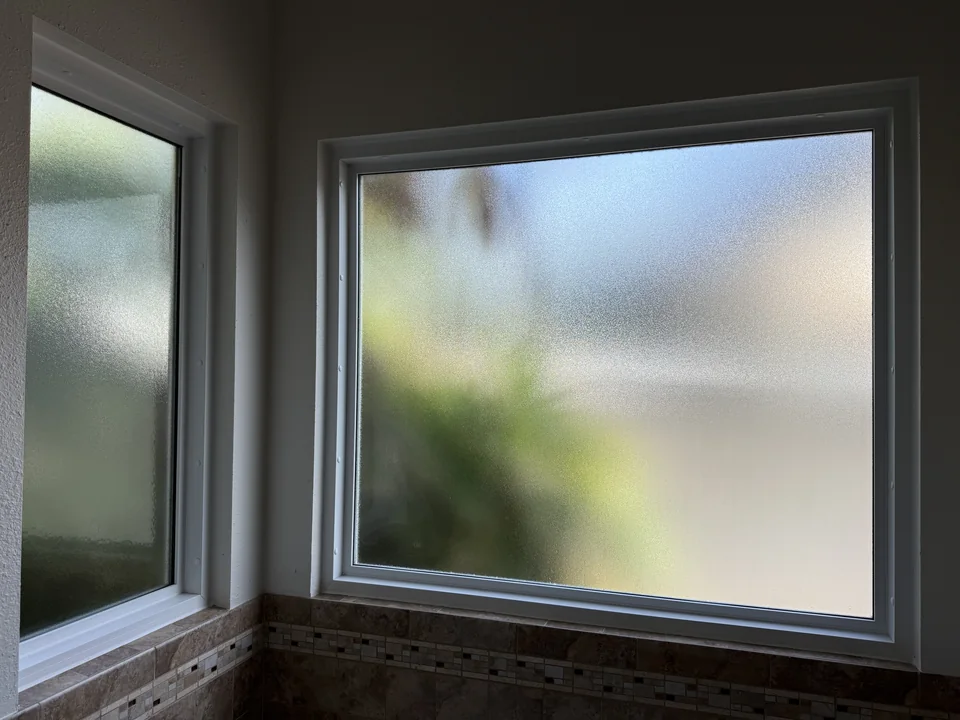
Start with what is on the other side.
A bathroom window facing the next house has a different job from a living-room window overlooking the backyard. In a Central Florida home, both may bring in welcome daylight, but only one may offer a view you want to keep.
Before choosing replacement windows, stand where you normally use the room. Look from the vanity, the desk, or the chair beside the window. Then check the view from your own yard or walkway. Note the places where someone could look in, and which outdoor views matter to you.
“Do I want to see through this window, or do I mainly want light from it?” That answer helps narrow the choices before you compare frames, finishes, or glass patterns.
What privacy glass actually changes
Obscure glass reduces the clarity of the view through the pane while letting daylight enter. Texture or a frosted appearance changes how you see through the glass. It also changes your view out, so it deserves a different conversation from choosing clear glass for a garden or pool view.
Pella's window-glass guide identifies obscure and frosted obscure glass as options for spaces such as bathrooms and bedrooms. PGT's privacy and window-treatment guidance also discusses textured glass and white interlayers, alongside the option of choosing different treatments for different windows.
The photo above shows textured privacy glass in a real Colonial installation. It is a useful starting point for discussing appearance, not a specification for your project. Ask to see a sample of the exact glass proposed and confirm availability for your selected window.
Do not judge privacy from a small online image alone. Ask how the sample looks from both sides, with someone close to it and farther away, and with the room lit after dark. Decide whether the result meets your comfort level or whether you also want a shade.
Choose what stays private and what stays adjustable.
Glass and coverings can work together. The useful distinction is whether you want a permanent change to the view or the freedom to open and close a covering throughout the day.
| Approach | When to consider it | What to check |
|---|---|---|
| Obscure or textured glass | You want daylight more than a clear view through that opening. | The actual sample, visibility from both sides, and options for the selected window. |
| Clear glass with a shade or shutter | You enjoy the view at some times and want privacy at others. | Where the covering mounts and whether it clears handles, locks, and the moving sash. |
| Privacy glass plus a covering | You want softened views during the day and additional control when the room is in use. | How the combination looks and works, including when the lights are on at night. |
Make a different decision for each room.
Bathroom: describe the exact concern
“More privacy” is a start. “This window faces the neighbor's patio while I am at the vanity” is more useful. Bring a photo of the opening and the surrounding tile. Discuss the glass, access to any hardware, and the finish work around the replacement together.
Bedroom: decide whether you want to keep the view
Write down when you want the window uncovered and when you want it closed off. If the morning view matters, compare adjustable coverings before committing to glass that permanently obscures it. Include existing shutters or blinds in the installation discussion.
Home office: sit at the desk first
A window behind your monitor may raise a different concern from one beside your chair. Mark the desk location on your room photo and explain whether the problem is visibility from outside, distracting glare, or both. Give each concern its own proposed solution.
Living room: preserve the view you chose the house for
Mark the windows that frame a favorite outdoor view. A side-facing opening may call for a different glass choice from a large picture window facing the yard. You can discuss a coordinated frame appearance without assuming every opening needs identical glass.
See how different openings fit together in this Colonial window and sliding-door project, including the privacy windows pictured here.
Review the complete window, beyond its appearance.
A glass sample answers an appearance question. Have the installer also identify the energy-performance specifications, any required safety glazing, and the applicable structural or impact requirements for the selected unit and opening. A privacy description alone does not establish those properties.
For a room that gets strong afternoon sun, explain both priorities: how private you want it to feel and how comfortable you want it to be near the glass. Ask what the quoted glass package does for each. Our Florida window-efficiency guide explains the separate energy conversation.
Also confirm whether each window should open. Review reach, clearances, ventilation needs, and any emergency-escape requirements before changing an operating window to a fixed one.
Bring a few photos and a short list
Five things to bring to your appointment
- The opening: one room-side photo and, where accessible, one from your own yard.
- The sightline: describe where privacy is needed and which view you want to preserve.
- The daily routine: note when the room is used and when coverings are usually closed.
- The existing finishes: photograph tile, trim, shutters, blinds, and nearby furniture.
- The written selection: ask the estimate to name the glass choice and operating style for each opening.
That last detail is easy to overlook. If two windows have different privacy needs, make sure the written proposal distinguishes them. Use our window-quote comparison checklist to review the rest of the project.
Common questions about privacy windows
Will privacy glass make the room dark?
It can admit daylight while softening the view, but the result depends on the glass and the room. Compare the proposed sample with your expectations instead of assuming all privacy options look equally bright.
Does every window in the house need the same glass?
Start with the purpose of each opening. Ask which glass combinations are available within the window range you are considering, then confirm the selections room by room.
Can I keep my existing shutters?
Have their mounting, depth, and operating clearance checked during the estimate. Confirm any removal or reinstallation work before assuming the replacement window will fit behind them.
A better fit for the way you live
Plan your windows with Tom.
Colonial installs replacement windows and sliding glass doors in Lake Mary, Orlando, and surrounding Central Florida communities. Show Tom the rooms where privacy matters and discuss the options for your installation project.
Request a free in-home estimatePrefer a conversation? Call (407) 484-5239 or text Tom.
Complete installation projects. No repair services or product-only sales.