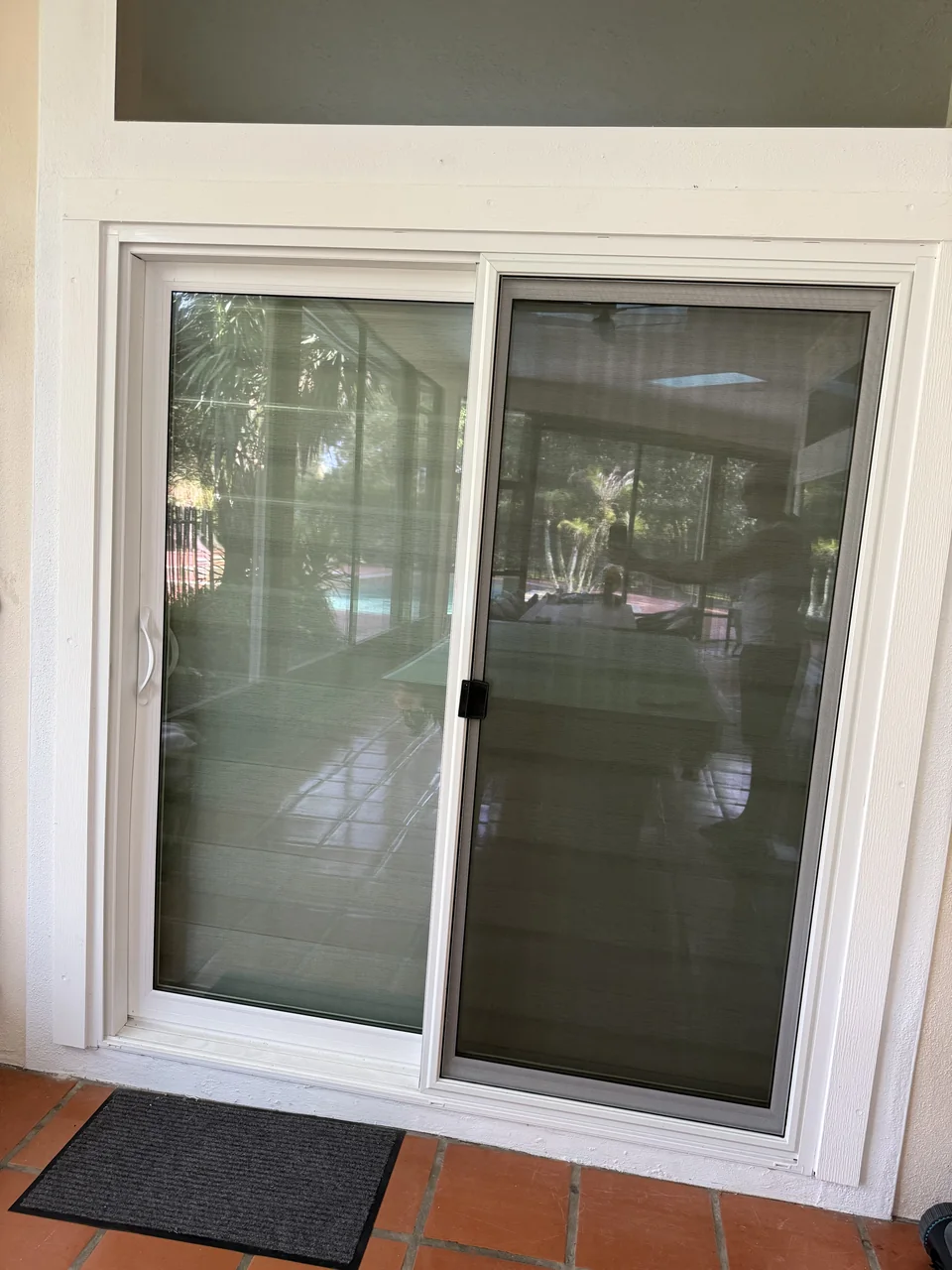
A sliding glass door is part of everyday life: the trip to the patio, the light across a room, the handle you use again and again. If yours drags, leaks air or has damaged glass, replacement can be an opportunity to improve both the opening and the way you use it.
The changes you notice depend on your existing door, the replacement you choose and the installation. Here are three areas worth discussing with Tom before you decide.
1. Comfort Near the Glass
When afternoon sun makes a room uncomfortable, ask about the glass package as well as the frame. Low-emissivity, or Low-E, coatings help control heat transfer; insulated glazing and gas fills can also influence thermal performance. Different Low-E coatings manage solar heat and daylight differently, so the name alone does not tell you how a particular door will perform. The U.S. Department of Energy explains these glazing technologies.
Ask Tom to show you the energy ratings for the exact door and glass option on your quote, and explain how they fit your room’s sun exposure. Your home’s shading, air conditioning and existing construction also affect comfort and energy use.
2. Everyday Sound
If outdoor noise is a priority, bring that up before the glass is selected. Ask for acoustic test information for the door assembly you are considering, and describe the sound you want to reduce: traffic, equipment or activity near the patio.
One rating you may encounter is OITC, Outdoor-Indoor Transmission Class, a laboratory-based measure of sound-blocking ability for building elements such as windows and doors. The Acoustical Society of America defines OITC here. Product ratings help compare options; the change you hear at home also depends on the installation and other paths sound takes into the room.
3. How the Door Opens, Closes and Locks
Operation deserves as much attention as appearance. Ask about the rollers, track, handle, screen and locking hardware included with your selected model. If anyone in the household finds the current slider difficult to use, explain that during the estimate.
During the final walkthrough, try the installed door yourself. Check that the moving panel, screen and locks operate as intended, and ask how to clean and maintain them. The exact hardware and features vary by product.
Five Questions to Bring to Your Estimate
- Which panel configuration fits this opening? Confirm what moves, which way it slides and how much walk-through space you will have. Our sliding door configuration guide explains the options.
- What product and glass package am I getting? Have the model, glass specifications and relevant ratings identified in the quote.
- What does the installed price include? Ask about removal, disposal, permitting, screen, finish work and anything that would be priced separately.
- How are unexpected opening conditions handled? Understand how additional work is explained and approved if damage is discovered during removal.
- What coverage applies? Ask for both the manufacturer’s warranty and the installation coverage, including who to contact if you need help.
Find the Right Slider for Your Home
Talk with Tom about your opening, your priorities and a written installed price. Ask about military and senior discounts, too.
Request Your Free EstimateStart with what matters most in your room, then compare the actual options. Browse Colonial’s sliding glass door installation service or read the signs that a slider may be ready for replacement.