Most homeowners picking out replacement windows eventually reach a question they weren't expecting: "What grid style do you want?" And most people have to admit they don't know, they just know what they like when they see it.
Here's the thing: window grids have actual names, and those names come from architectural history. Colonial grids are named after Colonial-era American homes. Prairie grids come from the Prairie Style movement. Once you know what to call each one, it's much easier to communicate what you want and to figure out what suits your home.
Here's a plain-English guide to the most common window grid patterns and where each one belongs.
What Are Window Grids, Exactly?
Window grids are the strips that divide a window into smaller panes. The terms get used interchangeably, but there is a real distinction: muntins are the original structural dividers that held separate pieces of glass, while grilles (or grids) are the decorative modern version laid over or inside a single sheet. In old single-pane windows those dividers did real work, because each piece of glass had to be small. Modern windows don't need them functionally, but many homeowners want them for appearance, particularly on the front of the home where they contribute to curb appeal and architectural character.
The Main Grid Styles
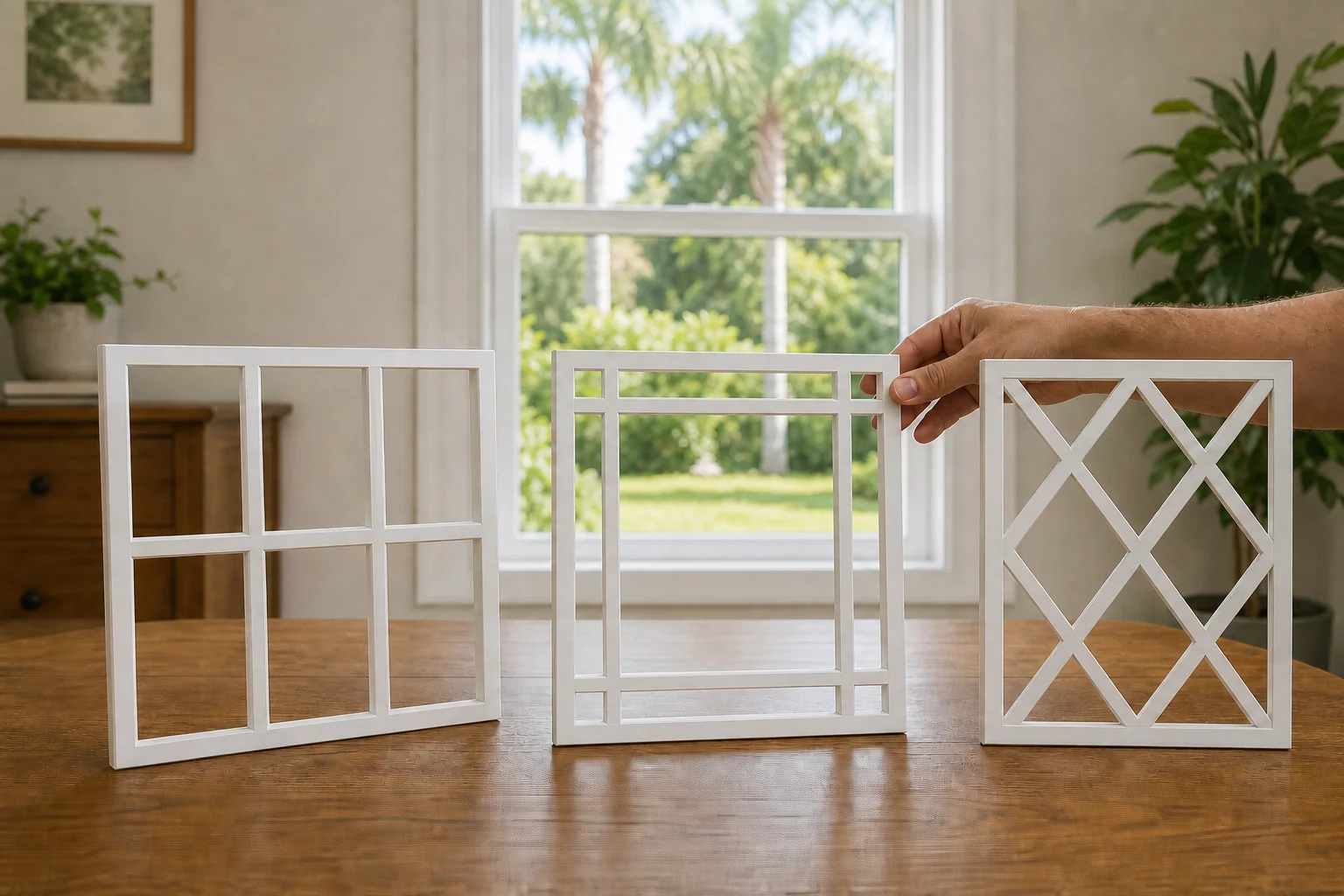
Six equal panes in each sash, three across and two down. The individual panes come out square or a little taller than wide, and that upright proportion is what makes the pattern read as colonial rather than just busy. The most recognized grid style in America, common on traditional, colonial revival, and Cape Cod homes.
A border of small squares around a large clear center pane. Inspired by Frank Lloyd Wright's Prairie Style. Clean, geometric, and at home on Prairie School, American foursquare, and mid-century designs.
Diagonal grid lines forming diamond shapes across the sash. Associated with Tudor, English cottage, and Victorian-era architecture. Distinctive and ornate.
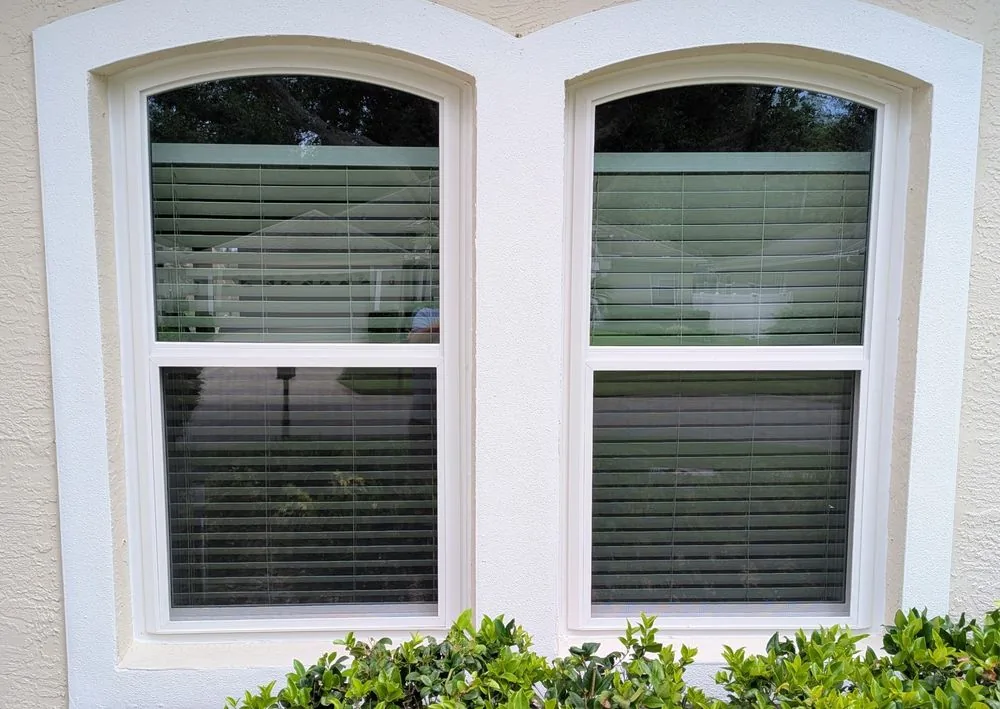
Clear glass, no dividers. Maximizes the view and light. Common on contemporary, modern, and Florida ranch-style homes where a clean look is the goal.
Other Patterns You May Encounter
2-Over-2
Two panes in the top sash, two in the bottom. A simplified version of colonial grids, still traditional in feel but less busy. Works well on homes where you want some architectural detail without the full six-pane look.
Craftsman 3-Over-1 (Fractional)
Three vertical panes in the upper sash, one clear pane on the bottom. Manufacturers usually file this under "fractional" patterns, since only a fraction of the window is divided. It's a Craftsman and Arts & Crafts signature rather than a Colonial one, the upper sash carries the visual interest while the lower provides unobstructed outward sightlines. You'll still see it on older craftsman bungalows being faithfully restored, often as 4-over-1 as well.
Perimeter / Marginal
A thin border of smaller panes runs around the edge of the sash, leaving a clear center. Similar in spirit to prairie but more delicate. Often seen on Victorian and Queen Anne homes where windows are meant to be decorative features.
Custom / Geometric
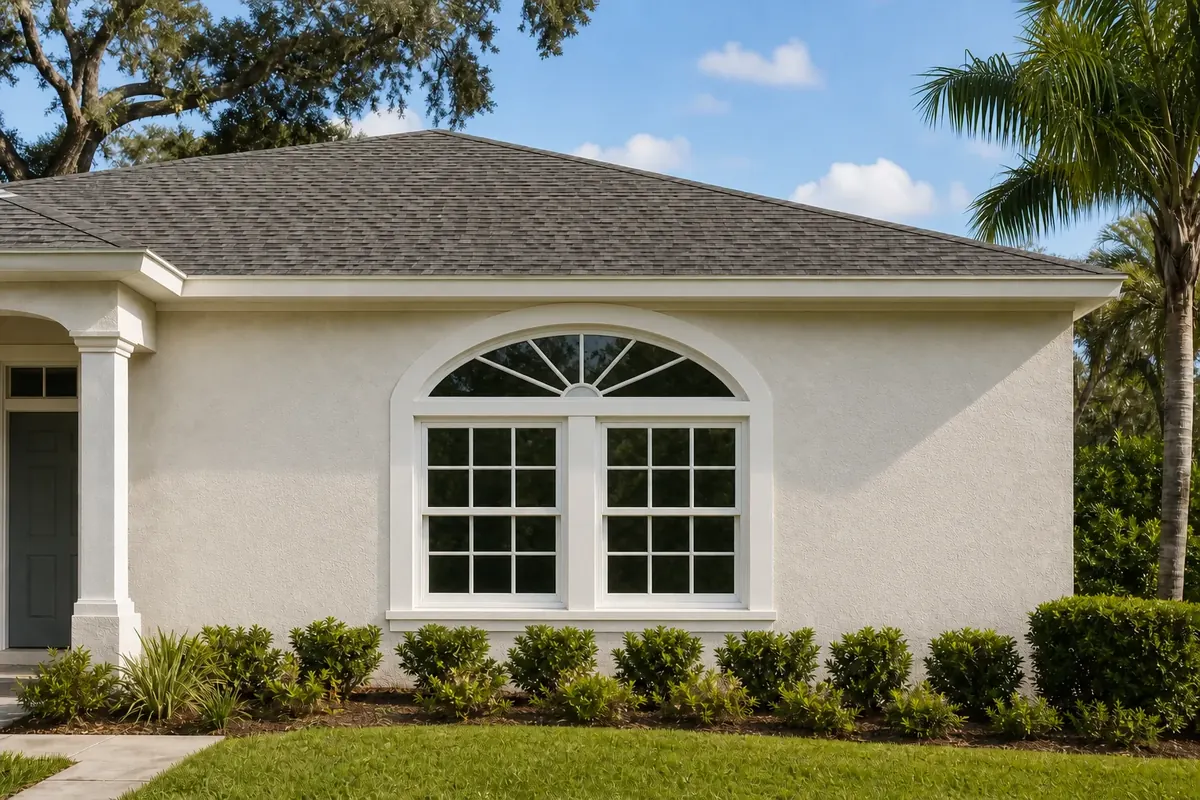
Arched windows, radius tops, and specialty shapes sometimes use custom grid patterns, sunburst, fan, or other configurations, designed specifically for the opening. These are ordered custom and typically found on focal-point windows like entryways or stairwell landings.
Why "Colonial" Grids Are Called That
The 6-over-6 pattern, six panes in the upper sash and six in the lower, came directly from the constraints of Colonial-era glassmaking. In the 17th and 18th centuries, glass could only be produced in small sheets. To fill a window opening, glaziers had to use multiple small panes held together by thin wooden strips called muntins. Six panes per sash became a standard configuration for that era's proportions, and the look became so closely associated with Colonial American architecture that it kept the name long after glass technology made large single panes possible.
Today's "colonial grids" are purely decorative, there's one piece of glass behind them, but the pattern is so ingrained in American residential architecture that it remains the most popular grid style by a wide margin.
How Grids Are Actually Built Into the Window
There are a few different ways manufacturers construct window grids, and it's worth knowing the difference before you order:
Grids Between the Glass (GBG)
The grid strips are sandwiched inside the insulated glass unit, between the two panes of glass. From the outside they look like traditional muntins, but there's nothing on the surface to collect dust or require cleaning. This is the most popular option for replacement windows today.
Simulated Divided Lite (SDL)
Individual grid pieces are permanently applied to the exterior and interior glass surfaces, so the pattern reads as real dividers from both sides. Looks far more authentic than grids sealed inside the glass. Costs more and requires occasional cleaning of the surface grids. If you add a matching spacer bar inside the insulated glass so the shadow line follows through, manufacturers call that full divided lite, the most historically convincing option and the most expensive.
Applied Grids
Snap-in or glued grid strips applied to the surface of the glass. The most affordable option, but they can warp, discolor, or come loose over time in Florida's heat. Generally not what you want on a quality replacement window.
Not Sure Which Grid Style Fits Your Home?
Tom can show you samples during your in-home estimate, it's much easier to decide when you can hold one next to your existing windows.
Schedule a Free EstimateChoosing the Right Grid for Your Home
The best rule of thumb is to match the grid style to the architectural character of your home, or to the character you want it to have. A few quick guidelines:
- Traditional, colonial revival, or Cape Cod homes: Colonial 6-over-6 or 2-over-2 grids are the natural match. They reinforce the period character without looking forced.
- Craftsman bungalows: A divided top sash over a clear bottom, 3-over-1 or 4-over-1, is the period-correct choice. Keep the panes vertical or square; horizontal grids read wrong on a Craftsman, even on small accent windows.
- Prairie School or American foursquare homes: Prairie grids are the fitting match. The border geometry echoes the horizontal banding those designs are built around.
- Florida ranch or mid-century homes: No grids or a simple 2-over-2 tends to look cleaner and more appropriate than a full colonial pattern.
- Contemporary or modern homes: Full view (no grids) is almost always the right call. Grids can look out of place on clean-lined architecture.
- Tudor or cottage-style homes: Diamond grids are the historically correct choice, though they're relatively rare in Central Florida.
When in doubt, look at what the rest of the neighborhood is doing, particularly homes of the same era as yours. Matching the neighborhood pattern usually looks more intentional than breaking from it.
And if you're replacing every window in the house, consistency matters. Mixing colonial grids on some windows and no grids on others tends to look patchy rather than planned. Pick one style and carry it through, or at minimum, be deliberate about where you do and don't want grids.